Monday, September 17, 2012

N’garua farmers attend Nyeri ASK show


By Bett Kipsang’

The thirst for information and new knowledge, saw thirteen farmers from Sipili sponsor themselves to attended the Nyeri National Agricultural Society of Kenya (A.S.K) show. Sipili stakeholders forum; an umbrella development body organized the trip that saw six women and seven men contribute fare and hired a Nissan Matatu to ferry them. Their sole objective was to learn from the rich display of information at Kabiruini showgrounds. This year’s theme for ASK shows was "Enhancing technology in agriculture and industry for food security and national growth."  

 Gauging from the conversations farmers had in the vehicle on their  way back, i am convinced that the trip to the show grounds will have a lasting positive impact on the participants. 

The Nyeri Agricultural show took place between 12th and 15th Sept 2012. It is one of the National shows organised by  A.S.K. The Central Kenya (Nyeri) National Show was started in 1968 at Ruringu Stadium, it was later moved to the new Showground in Kabiruini in 1997. 

Being centrally located in the Central Kenya region, the show was elevated to National Show status in 2004 to cover Nyeri, Nyandarua, Kirinyaga, Murang’a and Kiambu counties.

The show was attended by 71 exhibitors who included stakeholders in the following sectors; Agriculture, Livestock, Horticulture, Tourism, Beekeeping, Transport and Communication, Agro Industries and Financial Institutions among others. The latter showcased their products and services to thousands of participants drawn from all over East Africa. See more exhibitors on the link; http://www.ask.co.ke/branch-events/national-shows/nyeri/participation-5

Motor Bike fitted with water pump
There were unique technologies one of them being the use of motor bikes ‘‘commonly referred to as Boda Boda’’ to pump water into farms for irrigation. You no longer need to purchase  a water pump. You just need small gadget which can be fixed on the Motor bike’s engine and the work is done. Unlike the water pump, motor bike can be used for other activities other than pumping water.

The dairy sector was a source of inspiration for Mr. Peter Muturi. He was amazed to see a cow which can produce as much as 50 Kilograms of milk per day. Most of the farmers had never seen a cow capable of producing up to sixty litres of milk per day. ‘‘Am going to buy a cow and start upgrading to the highest pedigree level’’, said Muturi. He recounted that there were a lot of pasture back home especially during  rainy seasons as now. Milk fetches very high prices in Sipili almost throughout the year.

Jomo Kenyatta University of Agriculture and Technology (JKUAT) put up impressive performance that saw the varsity excel in the various themes of the show.

Among notable research projects that are generating great interest at the University stand include; rice production using reduced amounts of water, a simple and affordable capillary wick irrigation kit designed to increase food production at household levels while other scientists at the Department of Medical Laboratory Sciences are conducting studies aimed at providing a cure for snakebites rampant in Kenya.

Other interesting inventions at the exhibition include a multi-purpose energy saver machine developed by a second year student of mechanical engineering, Ms. Sarafina Maina that is capable of performing up to ten different functions at the same time. The machine can be used as a water boiler, a cooker, domestic water heater, and for baking among its other functions.

In his speech President Kibaki directed that a technical team be formed to investigate a new viral strain disease that has wiped out the maize crop in some parts of the country.

The Independent Electoral and Boundaries Commission (IEBC) stand has emerged the best in two categories scooping top awards.

The IEBC stand took position one in the information and communication category and was also declared the best state corporation in theme interpretation. 

Curious members of the public are flocking to the IEBC stand to inquire on various electoral issues. IEBC staff took the opportunity to educate visitors on Biometric Voter Registration (BVR), elective positions in the next general elections, political parties and the use of information technology in the electoral process.

ASK generated revenue to run the show through charging exhibitors between 40,000 and 30,000 for large and small stand respectively. Adults paid Kshs.200, while children paid - Kshs.150 at the gate. Special Parties paid  Kshs.150 for Adult and Kshs.100 for children.

Sources:


Saturday, September 1, 2012

ICT Centre Aid youth career Opportunities


By Bett Kipsang'
 
Access to current information in the remote arid areas can be as hard as squeezing water out of a piece of rock! The story of David Toroitich 22, from Maundu Meri in Rumuruti Division paints a grim picture of a community living far from the information age, where internet and newspapers are as scarce and hard to find as water.

David went to Dol Dol secondary school, where he studied under difficult financial situations. Hard work and determination saw him complete in 2009 with a C+ in the dreaded KCSE.
His parents are small scale farmers, keeping a few cattle, goats and sheep on a small piece of land. David is the second born in the family of nine and his father being polygamous has eight more children from the other family. 

All Davids siblings have faced financial difficulties in the pursuit of education. One of his elder brothers only completed form four and stayed at home for lack of school fees. The other one has managed to complete a teachers trainings collage recently. It was a big challenge to raise school fees, they almost dropped Midway. ‘‘To easy the burden for the parents, children in our family are admited to college in alternating sequences where one is admitted and the rest waits for him or her to finish before the other one is admitted’’ David said.

‘‘I have been working as untrained teacher in Minjore primary school, for the last one and a half years’’ he said.

 David has always had a burning ambition to pursue a career in journalism, but he did not have an idea of how to get a place in college and even if he found the place, raising fees was another mountain to climp. At some point he applied for admission in a private institution  and was admitted. His brother advised him to try any government institution, saying it was better off in terms of fee payment. His brother however never had the information about any of the government institutions offering journalism courses. 

‘‘As a coincidence i tuned the radio one day and overheard of a traffic update, that there was a snarl-up near the Kenya Institute of Mass Communication’’. Said David. With curiosity he travelled for over twenty kilometers to Sipili looking for a place where he could access the Internet and check for the website of the institution. 

In Sipili, David bumped into the Ngarua Maarifa Centre, ‘‘I thought it was another cyber business in town’’ he said. He was assisted with the contacts for KIMC. He called and got information of a September 2012 intake and that the advertisement will be published in the local dailies in June. Staff at the maarifa centre promised to get him the advert because David come from far and may not get the daily news papers on time. ‘‘I dont know how else i could have gotten the newspaper, i wanted to send the teachers who frequently goes to Nyahururu town to get me a daily newspaper but it became very expensive because i did not know when it would be published’’ he said. 

A parent whose daughter is currently studying at the institution and is a regular visitor to the Maarifa Center brought the advert.  David collected in two weeks time then made the application. He had crossed the first hurdle, with a sigh of relief. 

On 7th of August 2012, David received a call from the post office asking him to go and collect his parcel. He rushed there and opened the admission letter to the collage of his choice in great delight. He immediately scanned through the letter and the eyes stopped at the fee structure, David almost gave up because he was well aware of the position of his family! 

The fee was too high for his parents to afford. He however took the letter home, sat over it and discussed with the rest of his siblings and parents. They resolved to give it a try. David took off on a journey of Kilometres to visit the Maarifa Centre again. This time to report the news of his success and seek further information.

The news was received at the center with jubilation. It was a good testimony of how the centre is serving the hardly reached populations in the vast Semi-Arid Laikipia west. One of the staff at the centre called a lecturer to inquire for accommodation in the college and opened a social media update to show David the new college hostels where he will be residing. 

Though David is still pessimistic because of the financial difficulties, he has received a lot of insights including advice on how to seek financial assistance. An area chief who was downloading university fees structure for his daughter advised him to get the CDF application for in a nearby shop and biggin the application process. He was also connected to one of the KIMC lectures who can assist him immediate he arrives in Nairobi. David has been to Nairobi twice on school tours. 

The N’garua Maarifa fraternity is wishing David good luck as he set out to pursue his career ambitions.


Tuesday, August 7, 2012

Library handy for Extension staff


By Bett Kipsang' 

 Samuel Mureithi works with the ministry of livestock as an extension officer in Sipili division. He is a graduate in Animal Health from Egerton University.
Samuel Mureithi Accessing Internet at Ngarua Maarifa Centre
 When Mureithi was posted to Sipili eight months ago, his major concern was the availability of a community library or internet cafe in the area where farmers can be accessing updated information on new farming techniques from reliable institutions.

 He found the Ng’arua Maarifa Centre where he accessed all kinds of information he needs. He has participated in Focal Group meetings and outreach activities organized at the Ng’arua Maarifa Centre.

As an extension officer Mureithi, frequently need updated information in the field of livestock production like health, feeds, breeds, and general management. He has found free access to internet useful for research on information about livestock breeds, research on new fodder varieties, new breeding systems and feed conservation methods.

 Mureithi reported that, he has found information about improved indigenous chicken breed from KARI,
 to respond to the needs of farmers, who prefer to keep the improved indigenous chicken breeds other than their local breeds. The information sourced from the Maarifa Centre is processed and introduced to farmers through extension programs. He has done this through group trainings, farm visits, field days where he has reached over 300 farmers. 

 Mureithi recommends addition of more resource materials with information related to livestock health and production. He is very grateful for the services offered at the N’garua Maarifa Centre.

 Mr Mureithi can be reached through email- samuelmuriithi83@yahoo.com


Friday, August 3, 2012

Help comes in hand for Bondeni


By Dennis Kipkirui

After Laikipia Rural Voices (LRV) highlighted the plight of pupils in Bondeni Primary School in Laikipia West District on 24th May 2012, help has trickled in quickly for the school. Leaders from different walks of life converged three weeks later to raise funds for the school which is located in the semi-arid areas of Kenya. On 15th June the old pupils raised Ksh.250,000 and later the Constituency Development Fund (CDF) donated a further Ksh.250,000. This saw the construction of two new permanent classrooms which are now complete.

 On 26th July a further 1,050,000 was given to the school by the CDF to build more classrooms after they realized that the first donation built only two.

 LRV posted a story indicating a looming disaster after heavy rains pounded the area and ripped off the roof and part of the wall. Since there was no other place where the pupils would learn, they had to study under the precariously dangling roof supported by poles. Even with that state of affairs the pupils were expected to compete equally with their colleagues who come from the affluent society.

 CDF officials became proactive after reading the story from the LRV blog which had drawn attention to many people especially political aspirants from the area. With the general election being round the corner, the political class could not leave anything to chance. LRV had explicitly written that many pleas had been forwarded to CDF office to help the school but only turned a deaf ear on them.  The office has however given much attention has provided full support to the school.

On their part, the old pupils gathered and raised funds to have the school build permanent classrooms. From the onset it was evident that the school had produced prominent personalities working in different sectors. 

 Priests came together with teachers, doctors, security officers and business merchants. Although the notice of raising funds was short, all of them spared time out of their busy schedules to come in aid of their former learning hub. Most of them pitied the state of the school and said that despite their successes they have never had a forum which brings them together to facilitate the progress of their former school. They confessed that it was a big shame for them to enjoy the fruits of their success earned through the school while turning their backs on it. They said that they would not wish to have their friends and associates know the state of their former learning institution.

 They were grateful to LRV for drawing to their attention on the plight of the school. “We are thankful to Laikipia Rural Voices for informing us on this issue. I was going through the blog and saw the story. I contacted one of my former school mates, and we began calling one another and the attention grew. We then saw the need to meet in the school and see what we can do to alleviate the calamity,” said Mr. Muya, a police officer who attended the school in the 80’s.

 The school was started in 1979 with 265 pupils and 6 teachers and sits in on an 8 acre piece of land.  After its inception it has had its fair share of problems. It took the intervention of the then area MP Godfrey Gitahi Kariuki (famously known as GG) to have eight semi-permanent classrooms constructed which have been in use until the recent calamity hit the school.

 Bondeni stakeholders have had a myriad of challenges in their quest for better education. The hostile environmental conditions in this part of the country could not allow parents to have better learning facilities for their children. They had to go through thick and thin to fend for them and had nothing to spare for the school infrastructure. Poverty has taken toll of most homesteads. As fate would have it, wild animals in the neighboring conservancies had scared off the pupils and would not turn up early enough for their lessons.

 LRV acknowledges the contribution of all and sundry towards making the lives of pupils in Bondeni Primary School better.


Thursday, July 5, 2012

Library access transforms pensioner


By Bett Kipsan’g

A visit to Sipili market three years ago is a memorable moment for Mr. Stanley Ndumia Gikonyo. It was while doing his normal rounds in Sipili shopping centre after selling his farm produce that he noticed a sign post written “Ng’arua Maarifa Centre”. He was driven by curiosity and thought it wise to confirm what kind of maarifa (knowledge) is offered in this new facility in their locality. Unknown to him, his curiosity would lead to a long journey in quest for knowledge.

Stanley Ndumia selecting a book at Ng'arua maarifa centre library
Mr. Ndumia 65 is a retired primary school teacher currently engaged in farming. He has learned the art of farming kales, spinach, tomatoes and carrots which he sells in the local market.

 He also farms maize, beans, peas and sweet potatoes popularly known in the area as ngwaci. He is full of praises to Ng’arua Maarifa Centre for providing library services and attributes the success of his farming activities to the Centre. 

 Ndumia has been an occasional visitor who utilizes the library service. 

Some of the books he has come to like in the library include: How to make a kitchen garden, the ‘‘vertical garden’’ and ‘‘double digging’’ and ‘‘how to mitigate the effects of drought’’.

In his Kagaa home of Ndurumo Location, he has built a dam to harvest rain water and is currently planning to construct a greenhouse. He attributes all these new ventures to the skills acquired through the books he read in the library. In crop management, he now knows how to control pests by using locally available material which includes bitter herbs, neem tree, chilies, and tobacco leaves. This new technique which he still uses up to now has enabled him control aphids, caterpillars, and lice in his crops.

His knowledge on other cereals has been broadened. He is proud to be among the leading soya farmers in the area courtesy of the library service. He used to plant maize and beans only as the major cash crops but soya has been added to the list of his economic activities. He discovered how to cultivate this crop from a book borrowed from the Maarifa centre.

Horticultural sector has not been left behind by Ndumia. He can now preserve the otherwise perishable horticultural products using the new knowledge he has acquired. Kales and stinging nestle can stay for longer while awaiting disposal in the right market without any damage since the farmer knows how to preserve them.

In his livestock farm, things have radically transformed because he can comfortably preserve fodder and other legumes for future use by animals. He remembers reading a book on how to continue with productive livestock farming even in dry seasons. This he does very well. He confesses that unlike other farmers he is not a bitter man during drought because he can provide water for his animals from the dam and can replenish feeding troughs using feeds he stored during times of plenty. According to him this has only been possible because of the knowledge gained in Ng’arua Maarifa centre’s library.

When the former primary school teacher reflects on his managerial skills, he only wish that time would be reversed because he now has knowledge on better management. In particular he has learned how to manage time, self and other people. Since he cannot do anything to the past, what he has embarked on is to impart the skills on his children. He also passes the same knowledge to the community.

Mr. Ndumia observes that some people do not utilize this facility to the maximum yet it is readily available free of charge and can transform livelihoods. He advises that more proactive measures like chief’s barazas should be used to sensitize people on the importance of this library service. His parting shot is “knowledge is power; it is available in the Maarifa Centre library. If you need it, go for it, it is free!”


ICT's Enable market acces for Laikipia west farmers


  Marketing of Agricultural produce by farmers in Laikipia west was a big challenge until the inception of (sokopepe) an ICT based system supported by the ‘‘Arid Lands Information Network’’ (ALIN). The Sokopepe portal (www.sokopepe.co.ke) is used to connect farmers directly to prospective buyers. 

A tomato farm near Ol-mutuny Dam
 Farmers also have the opportunity to access market information like prices of different items to enable them make informed decisions before venturing into the market. ICT tools like mobile phones and the internet has given the process a mileage. To inquire for market prices for farm produce through the short message service (sms), type (price # crop name #location) and send via sms to 3227. 

 For example, if farmers want to sell a product, say beans, they can now access the market prices in major towns using their mobile phones at the comfort of their homes. They just have to type the message: (Price#Beans#Mombasa) and sending to 3227.

 The sokopepe portal automatically responds by providing the current market value of beans in that specific town and a procedure on how to make an order for the same, in case the inquirer is a potential buyer. An example of the response is ‘‘the price of Beans Mwitemania in Mombasa is Ksh. 6900 per 90 Kgs. To order for this product sms order#beans mwitemania#your quatinty#mombasa) and send to 3227, from Sokopepe’’ 

  Mr. Muthee Mwangi a tomato farmer from Githima Sub-location, Ol-moran Division Laikipia County was ushered into a world of easy marketing two years ago through a workshop held at the Maarifa Centre. A series of workshops were then organized by ALIN to build farmer’s capacity on issues to do with marketing of farm produce. 

Mwangi would later inform his peers about the latest innovation in their locality that has eased their market access. He also attended a workshop at the invitation of the Ng’arua based ALIN field officer Mr. Bett Kipsang. To him he thought this was just another capacity building exercise. 

However, it turned out to be an exercise full of good fortunes for farmers, like him, who had been troubled for a long time by lack of access to markets and market information. His fellow farmers received the news happily..

 Mwangi being a horticultural farmer grow tomatoes, carrots, water melons among other fruits. He is not alone in this; he belongs to a self-help group started in 2009 after a severe drought hit Laikipia District, it is named; Ol-Mutunyi Conservation Group, they also make efforts to conserve the environment
.  
In 2009, a lot of people migrated to other parts of the country because they could not tolerate the harsh conditions brought by the drought. However, the few farmers who remained were forced to device mitigation measures to avert the crisis facing the area. The birth of the Ol-Mutunyi conservation group came out as the best option. 

A diesel water pump used for irrigation
 The farms are located near the Ol-mutunyi dam, where they get water for irrigation, they produce a lot of food for local consumption and commercial use. Commercially, they could not rely on the local market to absorb all their supplies. This posed a great challenge which almost killed their dream of self-sustainability. Perishable commodities demands immediate marketing to avoid losses. It also emerged that it was not just a market that they needed but a good market which will give them better returns to continue with their activities.
Mwangi is full of praise for Maarifa Centre. He acknowledges the critical role the Centre played on their lives by linking them with buyers. His knowledge of sokopepe gave him an advantage. He uses the service to inquire about prices of commodities and receives instant feedback on his phone. Through the networks created, he also gets knowledge of the right seeds to buy.

Initially he started by uploading his offer of commodities in the system. A market surveyor was hired by ALIN to conduct market survey, mobilize and inform buyers about the system.The surveyor identified some buyers and shared their contacts with the farmers.

Some of the buyers showed interest and, they were connected to the group. They got in touch and finally started sealing several transactions. The group has so far made great strides in marketing their produce. ‘‘We already have an established market connections in major towns like Nairobi, Nakuru, and Eldoret’’ said Mwangi, adding that had it not been for Sokopepe, him and his fellow farmers would still be struggling to make a living out of our work. 

He proudly talked of several connections he has made and only chooses the most suitable to sell their produce to. His most recent opportunities enhanced by sokopepe are the booming market of tomatoes in Nairobi. He recently supplied Nakuru town with water melons. 
A buyer in Nakuru has also opened an opportunity for him to market his supplies in Kisii town.
They have had connections to open air- markets, institutions and individual buyers. ‘‘This initiative has helped us to evade the middle-men by connecting farmers directly to the buyers’’ Mwangi said referring to Sokopepe

Mwangi is now asking farmers to visit the Ng'arua Maarifa Centre to get knowledge on how to use sokopepe service in marketing their produce. He is also requesting the Centre to inquire for them information about the farming of ‘moringa’ plants which they have heard much about it over the radio but have little knowledge on its cultivation.

Monday, March 5, 2012

Is the society well informed of the rights of the dissabled?


 Education in Kenya is a fundamental right for all. Both able-bodied pupils and those who are physically challenged deserve equal opportunities to pursue their dreams and succeed in life. Getting an equal opportunity is not always easy, especially in the vast Arid and semi arid areas of Laikipia.

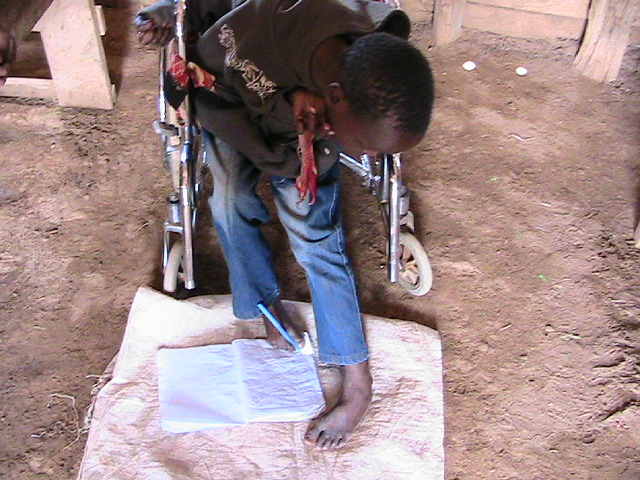
  Sebastian Njogu, is a ten year old pupil attending DINCOM Nursery school in Sipili Division. He is physically challenged and is the only pupil in that condition in the nursery school. ‘‘At birth, the Child’s neck was flexible, it was too weak to support the weight of his head, his hands were stiff’’ said Teresia, Njogu’s mother. Teresia recalls that at an age when Njogu could be mimicking words, the child was stammering and yelling out incoherent sounds. She observed stunted growth and slow development, ‘‘and we knew things were not alright with our baby!’’ said the mother. 

  Njogu was taken to DINCOM Nursery school at the age of eight. His hands could not hold a pen or book and his teacher’s taught him to scribble the writings on a book placed on the floor using his legs. The hard work of teachers has paid off in the long run. Holding the pen between his toe fingers, Njogu can now write the date, and numbers one to ten using his legs. ‘‘The speed is good and he has a good sense of hearing’’ said Madam Pricilla. Since he joined the nursery school, Njugo have been learning with other children but his physical status has posed a lot of challenges to teachers, who nonetheless have shown a lot of determination to assist the boy. So far he has successfully gone through nursery school; though he was retained because he had no one to take him to the nearby primary school three Kilometers from home.
‘‘His mother brings him to DINCOM nursery school every day, he is pushed on a small, wheelchair since he cannot push it on his own’’ said Pricilla. At the nearby primary school he was given some text books for class one, but due to space limitation and lack of enough teachers he learns class one lessons in the same classroom with nursery kids.  

 ‘‘The boy can write, bath, wash some cloths and remove his books and pen from the hand back, the only thing he cannot do is to eat on his own’’ said Pricilla wangui, a senior teacher at the nursery school.  He has a problem using the toilet alone and getting food to the mouth using his legs. Njogu cannot move the wheel chair forward on his own, but instead the chair moves backward.

Njogu’s parents are optimistic that given an opportunity, the boy can excel in studies and become an independent person in future. ‘‘We appeal to well-wishers to support Njogu with a bigger and stronger wheel chair to enable him to go to school’’. Said Teresiah, Njogu’s mother, adding that if a well-wisher could be identified who can sponsor Njogu in a good school they will be very grateful. There is only one special school in Sipili admitting deaf students only. 

Confirming the issue of the wheel chair, the area assistant chief Mr. John Kimaiyo said that Njogu needed a bigger chair and also deserved specialized training. ‘‘In spite of his physical status Njogu has displayed a rare talent in studies’’ Chief said. 

There are no suitable facilities in that school. The toilets are not designed for pupils with disabilities. Having completed the syllabus for nursery school, Njogu was forced to sit with nursery kids because he cannot go to the nearest primary school which is three kilometers away from his home.  The community is working together with the Maarifa centre to highlight issues affecting them. When the chief learned about the story of Njogu, from the teachers, he came to the Maarifa centre to inform staff and community reporters of the story. The chief was thankful to parent for exposing the issue, ‘‘In some cases such children are hidden away from public as parents deny that disable children exist in the society, but am happy that you have exposed this issue’’ said John Kimaiyo adding that all children have a right to education irrespective of their physical status. 

  DINCOM nursery school was started thirty years ago’’ said Madam Pricilla Wangui, who have worked as a teacher since then. She said that pupils who have gone through the two roomed nursery school have continued with education and excelled in life, ‘‘some have earned their degrees and worked for big organizations and government’’ she said. However, in her entire thirty years as a nursery school teacher Njogu is her first pupil with physical disabilities to be admitted in her nursery school. There are two teachers in that school.

Wednesday, February 22, 2012

Community leaders praise free ICT training


Trainees practice new ICT skills
   The chairman of Sipili stakeholder’s forum Mr. Joseph Mwati, has lauded the services offered by ALIN at the Ng’arua Maarifa centre in Sipili. Mr. Mwati appreciated the role of the Maarifa centre, saying that the services offered are not available anywhere else. 

‘‘Am a student, learning free computer lessons at the Maarifa centre and i have passed the first ICT test’’ he said. He was addressing a meeting attended by 20 registered community groups and organizations. 
The meeting took place on Tuesday 21st  Feb. 2012 at the divisional agriculture office. ‘‘On a light note a member cracked a joked that some people need ICT training in order to know how to put their phones on silent mode during meetings’’. One hundred community members are continuing with free trainings at Ng’arua maarifa centre.

Spili Cereal bank comes to the aid of small scale farmers.


By Bett Kipsan'g

Agricultural production and marketing by small scale farmers and especially inhabitants of the Arid and semi arid areas faces a myriad challenges. Good crop yields are as unpredictable and far apart as rainy seasons. Communities and development partners have devised interventions to reverse this trend.
The front view of the Cereal Bank
 In the year 2001, a noble idea to start a cereal bank in Sipili was borne.  A group of men meeting under the auspices of Catholic Men Association (C.M.A) came up with an idea to seek solutions to the perennial problem of hunger, food insecurity, poor food storage and lack of market access due to the presence of brokers. 

The idea would be to come together and put up a cereal bank with the membership open to all people, irrespective of social status, denomination, gender, political affiliations or religious believes.
‘‘Individual members should be 18 years and above and hailing from of Ng’arua and the neighboring divisions’’ said Joseph K. Mwati, the current cereal bank chairman adding that groups are also registered with them as corporate members. 

Stock of fertilizer inside the cereal bank.
 The idea was well received in the community with many residents registering to benefit from the new initiative. Today the bank boasts of a membership of 100 people, 73 Men and 27 women.
“They embraced the idea with enthusiasm and contributed Ksh 100 every month plus an additional ksh 500 as share capital,” the chairman said.

The group was registered with the ministry of gender sports and social services as a self help group. Members continued with their contributions and before long they had raised enough money to acquire a three acre piece of land where they built a mega permanent store known as Sipili cereal bank.
The store with a capacity of between 6,000 and 8,000- 90 Kilogram bags of cereals was built with the assistance of Ksh 0.6 million from the German embassy and Ksh 800,000 which had been contributed by group members at the time of building the store. 

“The construction was completed in the year 2002 at a total cost of Ksh 1.8million, which included member’s contribution in kind, like labour and time, amounting to Ksh 0.4m,’’ Mwati Said.
 The opperationalization of the facility was another task. ‘‘It opened the doors during a bad season when the harvests were poor,’’ he recalled. Members contributed six 90 Kg bags of maize each. Beans too had done poorly and they started with four kilograms only.

‘‘Our main objective in putting up of this storage facility was to fight famine and create a source of income through the sale of cereals by members’’ Mwati said. 

Currently, the cereal bank is working with other collaborators like non governmental organizations, ministry of agriculture and other development partners to Increase production of cereals in the area.

This happens through stocking of certified seeds not only for members but also for the general community. For the last two years the bank has assisted hundreds of farmers to acquire government subsidized fertilizer. This year 2012, the bank acquired 560 bags of 50 Kgs fertilizer worth Ksh 1.6m. This would not have been possible without the assistance of a non-profit organization; Agricultural Cooperative Development International – Volunteers in Oversees Cooperative Assistance (ACDI-VOCA). 

‘‘It was not an easy task to get the subsidized fertilizer. We tried Nyahururu, went to Nairobi and found none and that is when we got a tip that the commodity was available in Embu. ACDI-VOCA intervened by paying a one way trip for the fertilizer from Embu to Sipili. We are grateful,” the cereal bank chairman said.
The landing of fertilizer in the cereal bank was a great relieve to eager farmers who have prepared their farms and are acquiring planting materials before the onset of the long rains in March and April. 

Mwati said that the struggle to source the fertilizer from Embu, was catalyzed by well placed sources indicating that subsidized fertilizer were out of stock in the government stores and that the next shipment would only land in the country by early May. That would spell doom to farmers since they would be late in planting and therefore standing a great risk of getting poor yields. 

The bank buys cereals when the prices are low and then stores them until prices increase when they then sell posting huge profits to the benefit of the members. The initiative discourages middlemen who exploit farmers by buying farm produce at low prices only to resell the same at double or triple the prices.
Members of the cereal bank plans to source for good quality planting materials from trusted companies and organizations. Unsuspecting farmers in the area were last year exploited by unscrupulous business people who sold them fake maize seeds which they planted only to reap poorly.

 Word has it that unscrupulous traders use paint to color fake seeds to make them look certified before  packing it in bags and papers printed in renown seed companies packages before selling the same to unsuspecting farmers.

The farmers then end up getting poor yields therefore negatively affecting their food situation besides the economic status of the area and the country at large. The group is presently faced with a challenge of deficiency in its operating capital. ‘‘After the completion of the store, our funds reduced drastically with the current operating capital being Ksh 400,000 only’’ Mwati said.

 In spite of that, Sipili cereal bank has big plans; to start value addition of cereals, by sipping, grinding and packing in order to fetch higher prices. This will enable the group to earn from the ‘opportunity cost’ increasing income through the sale of the by-products, used as animal feeds. They look forward to acquire machinery through members’ savings, profits and support from well wishes.

 ‘‘As farmers, we are very grateful to well wishes like the ACDI-VOCA for their timely assistance in delivering the fertilizer. We can now prepare adequately and take advantage of the long rains to produce crops to the desired quantities.’’ said Mwati.

Tuesday, February 14, 2012

Farm level feeds formulation.


By Bett Kipsang'

SILIKEP Members pose for a photo outside their office.
Sipili Livestock Keepers (SILIKEP) is a community self help group of 30 members from Sipili. The group specializes in livestock rearing; a profitable venture which has not been fully exploited. The activity also poses a lot of challenges if care is not given. ‘‘The vision of the group is to keep high quality and productive livestock’’ said SILIKEP chairman Mr. Peter Mwaniki. 

One evening, Ann Wanjiru a trader and livestock health specialist invited the Maarifa Centre Staff to witness the process of feed formulation by the group.

The group was meeting at their office room within Sipili market. Ann briefed them before the actual process of feed formulation begun.

The chairman gladly informed the group of how he has gotten lots of assistance from the Maarifa centre, including typing of the bylaws used to register the group five months ago. The group is also working in collaboration with other development workers from the government, NGOs and the private sector to ensure that their goals were met.

 Farm level feed formulation was started in Sipili by Ann Wanjiru. She carried out a lot of research from books and the internet at the Maarifa centre and came up with methods of mixing ingredients which she used to train farmers. The tools required includes: weighing machine, spade and mat, and the ingredients includes; Maize germ, Wheat bran, cotton seed cake, sun flower cake, wheat Poland, limestone, DCP, Borne meal, fish meal and vitamin premix for making layers mash. DCP is substituted with formulated salt like (macklick) for the dairy meal. 100 Kilograms of layers mash and 100 Kgs of dairy meal were made on that day. 

Homemade feeds are of high quality; this is because the farmer has a choice to mix the ingredients in the required ratios. Powdery ingredients in commercial feeds sometimes sip through the bags during transport, a challenge solved with homemade feeds since movement, if any, is minimal. The cost of producing feeds at farm level is relatively low because the farmer can supplement the commercial ingredients with locally available materials. Cotton seed cake can be supplemented with Dolichos, Lucerne or any other available legumes. 

Ann mentioned that, while preparing her notes for the training, she visited the Maarifa centre to do research from books and on the internet. ‘‘Information sourced from the Maarifa Centre was very helpful’’ said Ann. SILIKEP members recounted different ways each has benefited from the Maarifa centre saying that it was a blessing to the Sipili community. They acknowledged that feed formulation was a simple undertaking that can be done at home by any farmer.

After preparation, farmers used the new feed for two weeks and made the following observations: Peter Mwanki reported that milk from his cattle increased by one litre per milking. After using the feeds john Maitho reported an increase in milk from 2.5 litre to 4 litre. Mr. Njuki’s and Joyce Wangari are poultry farmers who used the new feed. Mr. Njuki’s hens increased eggs from 3 to 12 per day. On the other hand Joyce Wangari reported that after using the home made feeds the number of eggs collected per day rose from 2 to 7.

Mrs Watetu’s hens improved laying from from 0 to 9 per day. SILIKEP chairman praised ALIN and maarifa centre for providing an access to the information.

Animal feed needs to contain various groups of nutrients, and the composition depends on the nutritional requirement of the animal being fed, its age and growth stage. Generally, protein is the most necessary element for body building and maintenance as well as milk production.

Without proteins, there would be no weight gain or milk production. Carbohydrates provide energy and body fats. Fats provide energy and the excess is converted to fat and stored in the body.

 Minerals help in body building as well as in biological regulation of growth and reproduction; it’s also a major source of nutrients in milk. Vitamins help regulate the biological processes in the body and become a source of nutrients in milk. Water on its part helps in body building, heat regulation, biological processes and a large constituent of milk production as well as eggs.

Basically, feed’s organic nutrients are required by the animals for three things: as materials for the construction of body tissues (growth and maintenance), synthesis of products such as milk and eggs, and a source of energy for work done. The work done include both metabolic (heat increment and maintenance) and physical e.g. walking and feeding.

Minerals are chemical elements which form important components of animal feed ingredients. The elements are essential in ensuring normal and proper functions of the body as well as in maintenance of good health. Lack of these essential elements in the diet causes cattle to show deficiency symptoms, like sickness poor health and low production. Some elements are required in relatively large amounts compared to others. For this reasons the minerals have been classified as 'macro-minerals' (required in larger amounts) and 'micro or trace-minerals' (required in minute amounts).

Macro-minerals are: salt, sulfur, magnesium, phosphorus, calcium. Micro-minerals are: like iron, iodine, cobalt, copper, fluorine, manganese, molybdenum, selenium, Zinc.

Tuesday, November 8, 2011

How Maarifa centre’s empower rural communities.


Mr. Kamau inspecting a newly completed jiko
ALIN's mission is to improve the livelihoods of arid lands communities through delivery of practical information using modern technologies.  The information is channeled through info-mediaries; comprised of community development workers (CDWs), NGOs and even government officers, who in turn pass it on to communities.
Mr. Kamua who works with an NGO called Tree Is life Trust (TILT) involve communities through transfer of technologies, knowledge and skills on sustainable agriculture and climate change. 

A part from being among the pioneer founders of the Ng’arua Maarifa center, he is also a frequent user of information resources available at the hub.
I paid a visit to his office and he narrated his experiences at the Maarifa centre since inception. From his feedback I established that besides benefiting as an individual, the communities he serves too have benefited from the knowledge he has acquired from the centre.
Networking.
The free internet service available at the centre gave him a platform to network with friends. He has subscribed to the social networks especially facebook thus enabling him to get in touch with his friends. He gets updates on new events through the site and widely receives and shares the same through the modern platform.
He frequently searches the internet where he receives mails and especially on the new resource mobilization strategies and opportunities. ‘‘I have been able to attended many workshops, and especially after getting connections through the net. This would have been difficult were it not for the availability of internet in this remote locality,’’ said Kamau.
Innovations
From his research, Kamau came across information on how to construct a Jiko, designed to serve both for cooking and as a chicken brooder. The heat from the Jiko provides warmth for young chicks, in a brooder underneath. He has tested the technology and many farmers have adopted and are successfully using it. ‘‘The energy saving jiko with a brooder have reached over 500 people within Ng’arua region and over 100 of them have been made’’ said Kamau.
Information hub
 From ‘’appropriate technology’’ magazines, he has learned how to make a mud tank, for harvesting the rain water from the roof. The technology has also spread far and wide with many low income earners in the society opting for the simple and cheap way of harvesting water. He has trained twenty groups on how to make the mud tank. Two primary schools have adopted the technology which is now benefiting more than five hundred pupils.
The success of these technologies earned the confidence of user’s on information sourced from the Maarifa centre. ‘‘The centre has therefore become a point of reference where I refer people to get more information on various subjects that I cover in my work,’’ said Kamau.

Publicity.
Last year, Kamau wrote an article which was published in the ALIN’s flagship journal, the Baobab. ‘‘That story has opened up my world,’’ he said, referring to the huge publicity he and his organization got from the story. The feature story was about a method of locating underground water using two copper wires held parallel to each other and horizontal to the body frame, a method referred to as water dowsing. ‘’since the story was published I have received calls from as far as Tanzania and Uganda.’’ readers are seeking for more instructions on how to use that method.  ‘’I have travelled to Murang’a twice and once in Athi river to show people how the technology works. ‘‘I am happy that all of the technologies were very successful,’’ he said.
The other skill he tried out from the information gathered from or through the Maarifa centre was making of a tubular biogas. ‘‘recently travelled to Kajiado, way past Nairobi, in a remote village of Nguruman to install a tubular biogas,’’ said kamau. The exposure, as he said gave him recognition from the communities and as such boosted his self esteem. It has also provided an alternative source of clean energy for the beneficiary households.
Skill gained
Kamau also operates a small business and has been sourcing information on how to run the business successfully.  ‘‘The knowledge gained from the books has enabled me to improve on the management of my business.
Convenience in sending reports.
‘‘Communication with the head office of our organization has never been a problem, I send reports and receive official information through the internet at the Maarifa centre’’ said Kamau.
By Bett Kipsa’ng
                                                                                                                                                                                       

Tuesday, October 18, 2011

‘‘Swimming for money’’ ended in tragic death of a swimmer.

A twenty seven year old man drowned yesterday in Ndaragwiti dam in sipili division Laikpia County. This was confirmed by the area chief Mr. Paul Nasky.

 The incident took place at around 1.00 PM in the afternoon. Three men left Sipili shopping centre and headed for Ndaragwiti Dam. According to Fred ndungu, who was among the three; the reason for going there was to determine who amongst them was ‘‘hero’’ in swimming. They placed a bet for a hundred shillings to be won by the best swimmer among the three. 

 Fred Ndungu, one of the swimmers started by swimming across a hundred meter stretch of the dam and back. The ill fated John Mwaniki, 27 could not resist the challenge, or else he could be looked down upon by his mates. He undressed quickly and dived into the water, beats his legs and hands around and before long he was completely exhausted. He sunk below the water, sprung up and whistled for help!
 Ndungu who is a better swimmer sensed danger and went to lend a hand to his friend. ‘‘I held him and tried to pull him out of the water, but he was very heavy. He even tried to hold me down and I thought we may both drown! I left him and hurried out’’ said Ndungu. 

 When Ndungu felt helpless, he came out, dressed very fast and went across the village to raise alarm that his friend was drowning in the dam! Within no time villagers had gathered by the dam in their hundreds. They put together their creative minds, sought for the rear wheel tube of a tractor, and inflated it with pressure to improvise a floater. One young man volunteered to steer the home made vessel as he scavenged the water using a long metal bar and a long hooked stick in desperate attempts to rescue the drowning man.
 Word went out to Sipili market and people started trooping to the water point in large numbers, they went on foot, bicycles, motor bikes and even vehicles. By five o’clock, hundreds of people stood by the dam watching helplessly as the lone ranger volunteer attempted to scavenge through the water hopping to stumble upon the body of John Mwaniki. 

 The large dam lay calm, except for the rolling ripples of water moved towards the lower end by the blowing wind. Onlookers sat in groups and communicated in low tones, bewildered by the tragic incident. By five O’clock in the evening, the cloths of John mwaniki were still by the dam side and people’s hopes of finding him alive was starting to diminish. The body was found floating on the water today, 18th/10/2011 in the morning.  

Drug and substance abuse.           
Sources privy to the provincial administration, reported that the slopes of the damn overlooking the water, was associated with young men smoking ‘‘weed’’, the street  name for ''Bhang'' an illegal drug. The place is said to be soothing due to the evening breeze. ‘‘They feel as if it is the coastal beach’’ said one of the men, who strongly believed the men went there to smoke the substances. One man in the crowed who sought anonymity said, the extra ordinary courage in john Mwaniki’s jumping into the water, knowing too well he was not good in swimming, was inspired by the influence of the ‘‘weed’’.
Related Posts Plugin for WordPress, Blogger...